
At a Glance
For a Southwest Florida home, the garage door is the largest opening and one of the most vulnerable points in a storm. A wind-load-rated (and where required, impact-rated) door is built to resist the pressure that causes the most hurricane damage, and choosing one correctly starts with your wind zone, not the look.
- Wind-load rating should be your first filter, confirm the door is rated for your address.
- A failed garage door lets wind pressurize the home, which can lift the roof, this is why codes focus on it.
- Reinforced steel struts and heavier panels are what give a door its rating.
- Impact-rated doors add protection against wind-borne debris in high-velocity zones.
Who this guide is for: SW Florida homeowners replacing a garage door, building new, or wanting to understand what makes a door truly storm-ready before hurricane season.
Why the garage door matters most in a storm
In high winds, the garage door is the largest moving surface on your house. If it buckles or blows in, wind rushes inside and pressurizes the home, pushing up on the roof and out on the walls. Many catastrophic storm losses start exactly this way.
That is why Florida building codes put so much weight on garage door ratings. Protecting this one opening protects the entire structure, and your family inside it.
Wind-load vs. impact rating: what is the difference?
Wind-load rating measures how much wind pressure a door can take without failing. Impact rating means the door also resists penetration from flying debris, required in High-Velocity Hurricane Zones and recommended near the coast. Many SW Florida homes need both.
Compare the main door options
| Door type | Best for | Keep in mind |
|---|---|---|
| Insulated steel (wind-rated) | Durability, value, energy efficiency | Choose coastal-grade, corrosion-resistant finishes |
| Impact-rated steel | Coastal & high-velocity zones | Highest protection against debris |
| Aluminum & glass (rated) | Modern curb appeal with light | Confirm the glass is impact-rated |
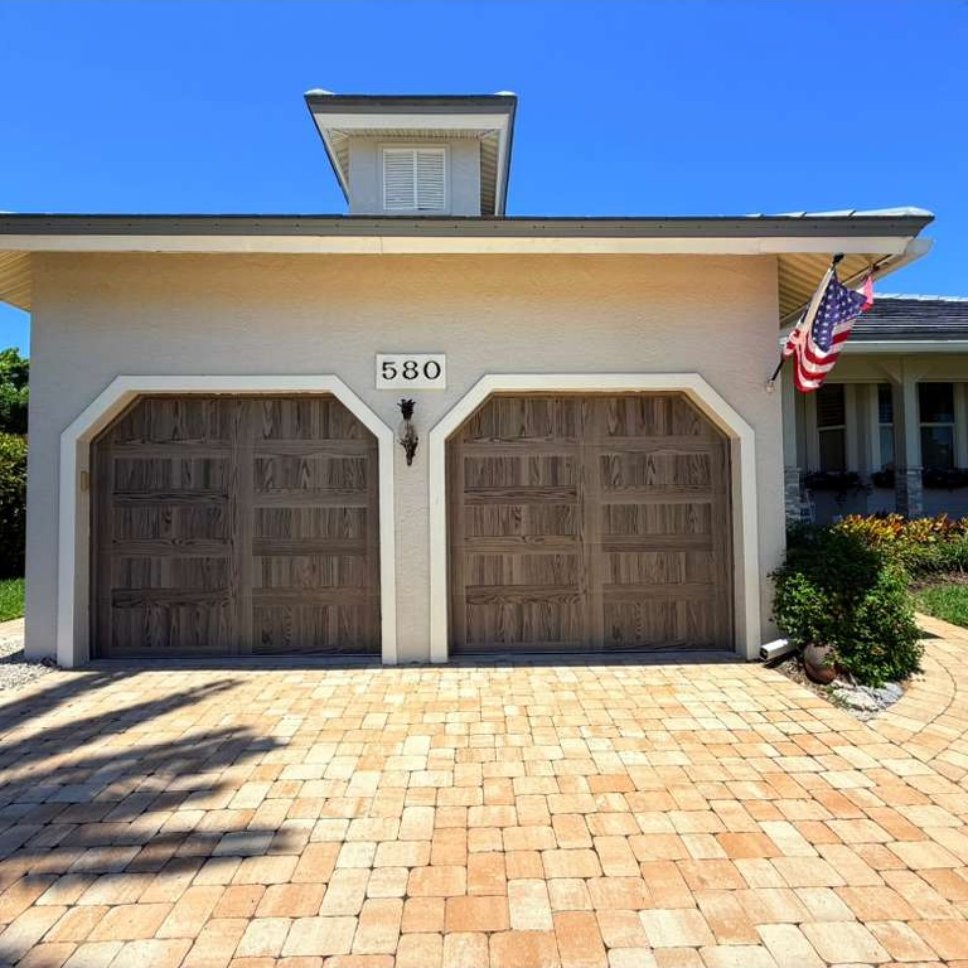
| Composite / wood-look | Premium look, low maintenance | Great for the coast when wind-rated |
Do not forget insulation and the track system
In the Florida heat, an insulated door keeps an attached garage cooler and eases the load on your air conditioning, while adding rigidity that helps the door hold up. The rating also depends on proper reinforced tracks and heavy-duty hardware, a rated panel on weak tracks is not a rated system.
Getting the rating right at installation
A wind rating is only valid when the door is installed to spec: the correct struts, reinforced tracks, and the right fasteners into solid framing. A professional, code-compliant installation is what preserves both the manufacturer warranty and the official rating, this is not the place to cut corners.
Common mistakes to avoid
- Confirm the required rating for your exact address
- Choose coastal-grade, corrosion-resistant materials
- Insist on a code-compliant installation
- Keep documentation for insurance and inspection
- Don’t pick a door on looks alone
- Don’t assume any new door is wind-rated
- Don’t reuse weak tracks with a rated panel
- Don’t skip the permit and inspection
How we can help
Planning a storm-ready upgrade? These are the services SW Florida homeowners ask us for most.
Frequently asked questions
Are all new garage doors hurricane-rated?
Do I need an impact-rated door or just wind-rated?
Can my existing door be reinforced instead of replaced?
Will a hurricane-rated door lower my insurance?
How long does installation take?
Ready for a storm-ready garage door?
We will confirm the right rating for your address, match the style to your home, and handle a clean, code-compliant installation across Southwest Florida.
📞 Call (239) 955-0708 Get a free estimate