Why does a garage door stick shut in cold weather?
A garage door sticks when moisture, ice, or debris bonds the bottom seal to the floor, or when hardware and rubber stiffen in cold weather. To prevent it, keep the bottom seal clean and flexible, keep water from pooling at the threshold, and have worn parts repaired before cold weather. If the door sticks, do not keep pressing the opener or force the door, because that can damage the panels and strain the motor.
Hard freezes are uncommon in Southwest Florida, so a garage door frozen solid is rare here. But cold fronts do arrive, and a door can stick for reasons that look a lot like freezing: a bottom seal stuck to damp concrete, stiff rubber on a cool morning, or moisture built up in the tracks. This guide covers what causes a stuck door, how to prevent it, and what to do without damaging anything.
Key Takeaways
- True freezing is occasional in Southwest Florida, but cold, damp mornings can still cause sticking.
- The bottom seal is the most common place a door gets stuck to the floor.
- Forcing a stuck door with the opener can damage panels and strain the motor.
- Clean, flexible seals and tidy tracks prevent most problems.
- Springs, cables, and tracks are professional repairs even in a cold snap.
Does a Garage Door Really Freeze Shut in Florida?
It can, but it is not common. When overnight temperatures drop to or near freezing and moisture is present, water can freeze along the bottom of the door. More often, though, the problem is milder: a rubber seal pressed against damp concrete, or tracks and rollers coated in moisture-laden grime.
The National Weather Service Tampa Bay publishes forecasts for the region, which is useful if a cold front is on the way. Even in a mild climate, a night or two of unusual cold can catch an unprepared door.
Why a Door Sticks in Cold, Damp Weather
A garage door depends on moving parts that must travel freely along the tracks and a seal that must lift cleanly off the floor. Several things can interfere.
| What You Notice | Possible Cause | What to Do |
|---|---|---|
| Door will not rise, but the opener hums | Bottom seal stuck to the floor | Stop the opener and clear moisture or debris at the floor edge |
| Door lifts slowly or strains | Stiff lubricant, tight hardware, or a worn spring | Schedule an inspection |
| Seal looks stiff or cracked | Aging rubber that no longer flexes | Plan for weather seal replacement |
| Door jumps or catches in the track | Debris, worn rollers, or a damaged track | Stop using the door and call |
| Door lifts only a few inches | Broken spring or cable | Do not force it. Call for service |
A door that fails to move may be sticking, but it may also have a mechanical failure. That is why it is worth understanding the difference before pressing the button again.
Prevention Starts With the Bottom Seal
The bottom seal is the part of the door that meets the floor, so it is the first to pick up water and the first to stick. A seal that is cracked, flattened, or hardened does not release cleanly, and it leaves gaps that let water in.
Eddie’s Garage Door’s weather seal replacement service installs UV-resistant rubber or vinyl seals along the door’s bottom, sides, and top. Cracked, flattened, or brittle rubber usually signals that a seal has reached the end of its life.
A Simple Prevention Checklist
These steps cost little and are safe for most homeowners.
- Keep the threshold clear. Sweep away leaves, dirt, and standing water along the door’s bottom edge.
- Look at the floor. If water pools where the door closes, find out why and address drainage.
- Inspect the seal. Replace it if it is cracked, flat, or brittle.
- Keep the tracks clean. Wipe out dirt and debris, and do not coat tracks with heavy grease.
- Schedule a tune-up before a cold snap. Lubrication and hardware checks reduce stiffness and wear.
For more on why regular service keeps hinges and rollers moving smoothly, see the importance of regular garage door maintenance and tuning.
What to Do If the Door Is Stuck
When a door will not move, stay calm and avoid shortcuts. Repeatedly pressing the remote or pulling the door by force can turn small problems into broken panels and burned-out motors.
- Stop using the opener once you notice the door is not moving normally.
- Look at the bottom edge for ice, debris, or a seal stuck to the floor.
- Clear loose debris and standing water by hand. Do not chip at the seal with tools or pour boiling water on it.
- If the door is still stuck or moves unevenly, call a professional.
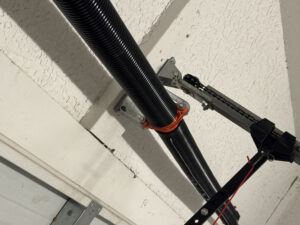
Never touch the springs, cables, or bottom brackets while trying to free a door. The Door and Access Systems Manufacturers Association warns that cables and springs are dangerous components that trained technicians should handle.
Stuck Door? Get It Moving Again Safely
If your door will not budge or keeps catching, an inspection can tell you whether it is a simple seal issue or something more serious. Eddie’s Garage Door is licensed, insured, and family-owned, with free, upfront estimates and same-day service for many repairs. Request a free estimate or call (239) 955-0708. If a vehicle is trapped, our 24/7 emergency garage door service is available.
Cold Weather Also Tests Worn Parts
Cool temperatures usually don’t break a healthy door, but they can expose parts that are already worn. Stiff lubricant, aging rollers, and tired springs may all show up as a door that strains or shakes on a chilly morning.
That is a good reason to address problems before they stack up. A worn roller can be handled with roller replacement, and a door that moves unevenly may need track repair and alignment. If the door is old and has repeatedly failed, replacement may be worth considering, and a technician can walk you through the options.
Keep Your Door Moving Through the Cool Months
A little prevention goes a long way, even in a mild climate. Eddie’s Garage Door can inspect your seals, hardware, and opener and provide a free, upfront estimate for anything that needs attention throughout Southwest Florida. Request a free estimate or call (239) 955-0708 to schedule service.
Frequently Asked Questions
Can a garage door freeze shut in Southwest Florida?
It can, but it is uncommon. Freezing temperatures are occasional in the region, and moisture on the floor or seal during a cold night can make a door stick. More often, a stuck door is caused by a worn seal, debris, or a mechanical problem.
What should I do if my garage door will not open on a cold morning?
Stop using the opener and look at the bottom edge for ice, debris, or a stuck seal. Clear anything loose by hand. If the door still won’t move, or moves unevenly, call a professional instead of forcing it.
Is it safe to force a stuck garage door open?
No. Forcing a door can bend panels, damage the opener, or move parts that are under tension. If it is a spring or cable problem, it can also be dangerous. Stop and have a technician inspect the door.
How can I stop my garage door seal from sticking?
Keep the threshold clear of water and debris, and replace seals that are cracked, flat, or hardened. A technician can install new seals and check that the door closes evenly. Eddie’s Garage Door offers rodent-resistant bottom seals for garages where pests are a concern.
Do you offer emergency garage door service in Southwest Florida?
Yes. Eddie’s Garage Door offers 24/7 emergency service and same-day service for many repairs, depending on schedule and location. We serve Lee, Collier, Sarasota, Manatee, Hillsborough, Pinellas, Charlotte, and Pasco counties. Call (239) 955-0708.