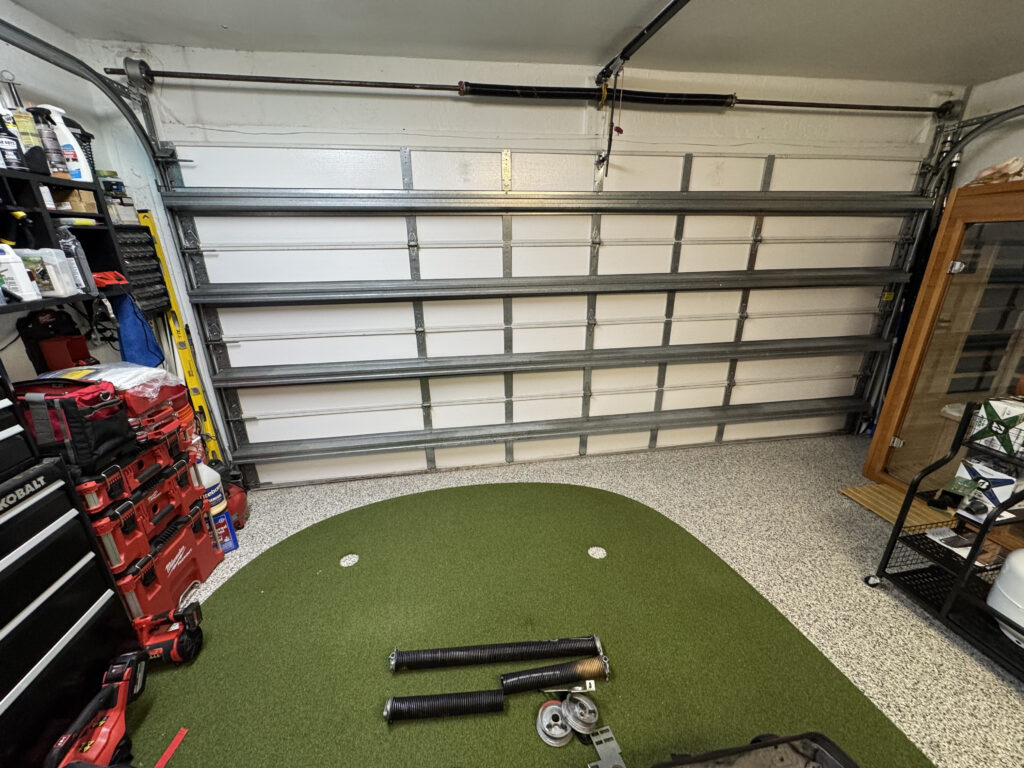
Why is my garage door noisy, and what can I do about it?
Most noisy garage doors come from worn rollers, dry or dirty hardware, loose parts, a worn opener, or a spring or cable under strain. Cleaning debris from the tracks and wiping down the door is safe for homeowners. Springs, cables, tracks, and opener internals are not. If the noise comes with shaking, uneven movement, or a heavy door, stop using it and schedule an inspection.
A garage door that suddenly gets loud is usually reporting a specific problem. The sound narrows the cause: grinding points to one thing, popping to another, and a rattle to a third. This guide helps you match the noise to its likely source, decide what is safe to do yourself, and know when to call a technician.
Key Takeaways
- The type of sound is a clue: grinding, squeaking, popping, and rattling usually have different causes.
- Noise that gets worse over time almost always signals wear, not a temporary quirk.
- Worn rollers and a tired opener are two of the most common sources of a loud door.
- Loud snapping or a door that will not lift needs immediate professional attention.
- A short video of the noise helps a technician diagnose it faster.
Decode the Noise Before You Guess
Before calling anyone, note when the noise happens. Does it appear only while the door opens, only while it closes, or the whole way through? Is it coming from the door itself, from the ceiling track, or from the opener motor?
Use this table as a starting point. This is not a diagnosis; a technician should confirm the cause.
| Sound | Possible Cause | What to Do |
|---|---|---|
| Squeaking or chirping | Dry hinges, rollers, or other moving hardware | Schedule a tune-up with proper lubrication |
| Grinding or scraping | Worn rollers, debris in the track, or a misaligned track | Clear visible debris, then call if it continues |
| Rattling or vibrating | Loose hardware or a worn opener mount | Have a technician tighten and inspect |
| Popping or banging | Spring tension changes or a door out of balance | Stop using the door and call |
| Loud humming with little movement | Opener motor or gear strain | Stop using the opener and book a repair |
| Sudden loud snap | Broken spring or cable | Do not operate the door. Call for emergency service |
Not every garage door makes the same noise when healthy. Chain-drive openers are typically louder than belt-drive models, so a door that has always had a mechanical hum may be normal. What matters is a change from how your door usually sounds.
Why Doors Can Get Louder as the Season Changes
Garage doors are mostly metal and rubber, and both react to temperature and moisture. Lubricant can thicken or wear off, and rubber parts can stiffen. Humidity that lingers through fall in Southwest Florida can also corrode hinges and roller hardware.
The weather often exposes a problem rather than causing it. A roller that was already wearing out may only start to grind when conditions change slightly. That is why a new noise is worth taking seriously even if it seems seasonal.
The Usual Suspects
Worn rollers
Rollers guide the door along the tracks and take a lot of cycles. When they crack, wobble, or seize, the door gets noisier and puts more strain on the opener. Our roller replacement service addresses cracked, loose, or frozen rollers and finishes with lubrication and a noise test.
Track problems
Bent or misaligned tracks cause scraping and uneven movement. A track that looks dented should not be forced back into shape. A technician can handle track repair and alignment safely.
A tired opener
Grinding, straining, or rattling from the motor unit can point to worn gears or other internal parts. Sometimes a repair solves it. In other cases, an older opener is better replaced. We cover 3 signs your garage door opener needs an immediate upgrade.
Springs and cables under strain
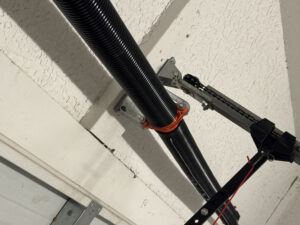
Popping, banging, or a shuddering door can mean the spring system is wearing out. Springs are one of the most dangerous parts of a garage door to handle, which is why we explain why broken garage door springs are not a DIY job.
What You Can Safely Do Yourself
There are a few low-risk steps. Clear visible debris from the tracks and the floor beneath the door. Wipe down the door and check that nothing is rubbing against it. If the opener has a wall button with a lock or vacation mode, make sure it is not engaged.
Then record a short video of the door running, with the sound audible. Note whether the noise happens while opening, closing, or both. This information helps a technician quickly narrow down the problem.
Do not tighten bolts near the springs, brackets, or cables. Do not attempt to lubricate springs or force a stuck door. The Door and Access Systems Manufacturers Association notes that springs and cables are dangerous components, and that cables should be replaced only by a trained technician.
Get the Noise Looked At Before It Gets Worse
If your garage door has been noisy for more than a few days, an inspection can identify the cause and show whether a targeted repair or tune-up is enough. Eddie’s Garage Door is a licensed, insured, family-owned company serving Southwest Florida, with free estimates and same-day service for many repairs. Request your free estimate or call (239) 955-0708.
Repair or Just a Tune-Up?
Not every loud door needs parts. A squeak from dry hinges may be solved by a proper lubrication visit. A grinding roller needs replacement. A struggling opener may be repaired or replaced depending on its age and condition.
| Situation | Tune-Up May Be Enough | Repair or Replacement May Make More Sense |
|---|---|---|
| Squeaks that began recently | Often | Rarely |
| Grinding from worn rollers | Not by itself | Usually, with roller replacement |
| Noise from an older opener | Sometimes | Worth evaluating if problems repeat |
| Popping with uneven lifting | No | Yes, inspection needed first |
A technician should inspect the door before anyone decides which route makes sense. For problems that do not fit a simple category, start with a general garage door repair visit.
Bring Back a Quiet, Smooth Door
A noisy garage door is easier and cheaper to fix when the problem is caught early. Eddie’s Garage Door can diagnose the sound, explain what is causing it, and quote the repair before starting work. Request a free estimate or call (239) 955-0708 anywhere in Southwest Florida.
Frequently Asked Questions
Why is my garage door suddenly so loud?
A sudden increase in noise usually means a component has worn, loosened, or begun to fail. Worn rollers, dry hardware, debris in the tracks, and a struggling opener are common causes. If the noise is paired with shaking or a heavy door, stop using it and call a technician.
Is it safe to use a noisy garage door?
It depends on the noise. A mild squeak is usually not urgent, but grinding, popping, or a door that moves unevenly may signal a spring, cable, or track problem. When in doubt, avoid using the door until it has been inspected.
Can I fix a noisy garage door myself?
You can clear visible debris and clean the door. You should not adjust or lubricate springs, work on cables, or realign tracks. Those parts carry high tension and can cause serious injury. A professional can diagnose and fix the cause safely.
What does it cost to quiet a noisy garage door?
Pricing depends on the cause, the door, and whether the existing parts need repair or replacement. Eddie’s Garage Door gives free, upfront estimates so you know the cost before work begins.
Do you offer emergency service for loud snapping sounds?
Yes. A sudden loud snap often means a broken spring or cable. Eddie’s Garage Door offers 24/7 emergency service. Call (239) 955-0708, or learn more about emergency garage door service.